
Today, the FIFA World Cup is the biggest sporting event on the planet. Billions of viewers tune in, the best players compete, and nations stop to watch history unfold.
But the early tournaments were very different.
The first few editions of the FIFA World Cup were filled with long sea voyages, political drama, amateur players, and shocking moments that shaped football history forever.
Many of these fascinating stories rarely appear in mainstream football coverage.
In this article, we explore the untold stories of early World Cups the dramatic beginnings that helped create the world’s most prestigious football tournament.
1930 World Cup: A Tournament That Almost Failed
The 1930 FIFA World Cup was hosted in Montevideo, Uruguay, marking the first-ever global football championship.
But convincing teams to participate was incredibly difficult.
At the time, traveling from Europe to South America required a two-week transatlantic ship journey. Many European countries refused the invitation due to travel time, costs, and concerns about leaving their domestic leagues.
Eventually, only four European teams participated:
- France national football team
- Belgium national football team
- Romania national football team
- Yugoslavia national football team
The players traveled aboard the ship Conte Verde, training on the deck during the journey.
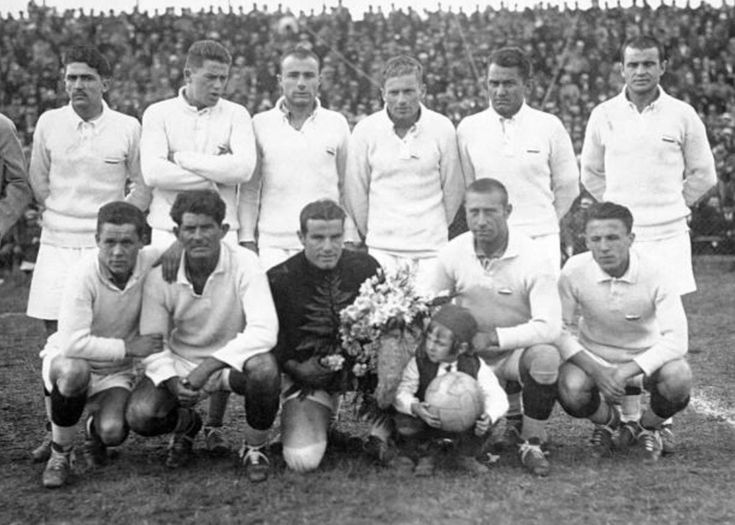
Yugoslavia football team 1930
Despite the challenges, the tournament became historic when the Uruguay national football team defeated the Argentina national football team 4–2 in the final.
The Strange Story of the Match Ball
One of the most unusual moments in World Cup history happened during that final.
Argentina insisted on using their match ball for the first half, while Uruguay demanded theirs for the second half. Officials reached a compromise.
- First half: Argentina’s ball
- Second half: Uruguay’s ball
Argentina led early, but Uruguay dominated the second half and won the tournament.
This strange compromise remains one of the most bizarre details in football history.
1934 World Cup: When Politics Influenced Football
The 1934 FIFA World Cup took place in Italy and became the first tournament heavily influenced by politics.
Italy was ruled by dictator Benito Mussolini, who saw the World Cup as a powerful propaganda tool to showcase national strength.
Several matches in the tournament sparked controversy, especially the quarter-final clash between:
- Italy national football team
- Spain national football team
The match was so brutal that multiple players were injured. The replay the following day featured seven new Spanish players due to injuries from the first match.
Italy eventually won the tournament, but debates about political pressure and referee influence still surround the competition today.
1938 World Cup: Football on the Edge of War
The 1938 FIFA World Cup in France took place during a tense period in European history.
Just months before the tournament, Austria was annexed by Germany in the historical event known as the Anschluss.
Austria had already qualified for the World Cup, but its national team was suddenly dissolved.
Several Austrian players were forced to join the Germany national football team.
The combined squad struggled and was eliminated early, demonstrating how political events directly affected international football.
After the 1938 tournament, the World Cup was suspended for 12 years because of World War II.
1950 World Cup: The Greatest Shock in Football History
When the tournament finally returned with the 1950 FIFA World Cup, it was hosted in Brazil.
Instead of a traditional final, the tournament used a final group stage format.
However, the final match between:
- Brazil national football team
- Uruguay national football team
essentially became the championship game.
Brazil only needed a draw to win.
More than 200,000 fans packed the legendary Maracanã Stadium in Rio de Janeiro.
Brazil scored first and the crowd celebrated early.
But Uruguay shocked the world by scoring twice and winning 2–1 in what is now known as the Maracanazo.
The defeat devastated Brazil and remains one of the most dramatic moments in football history.
Forgotten Heroes of the Early World Cups
The early World Cups were not dominated by millionaire superstars.
Many players had regular jobs outside football.
For example, José Nasazzi, captain of Uruguay’s 1930 champions, worked as a stonemason.
Meanwhile, Brazilian legend Leônidas da Silva—one of the stars of the 1938 tournament—helped popularize the spectacular bicycle kick.
These players helped shape the identity of international football long before modern fame and wealth arrived.
Why the Early World Cups Still Matter Today
The modern World Cup is a billion-dollar spectacle, but its roots are far more humble.
The early tournaments featured:
- Players traveling weeks by ship
- Political influence shaping matches
- Amateur athletes competing against professionals
- Dramatic moments that changed football forever
Without these early tournaments, the global football culture we know today would not exist.
The untold stories of early World Cups remind us that the history of football is not just about trophies—it’s about courage, passion, and the unpredictable beauty of the game.
Final Thoughts
From ship journeys across the Atlantic to shocking upsets in front of massive crowds, the early World Cups were full of unforgettable stories.
These forgotten moments shaped the identity of the tournament and helped turn football into the global phenomenon it is today.
If you love football history, these early chapters reveal a fascinating side of the game that many fans have never discovered.