
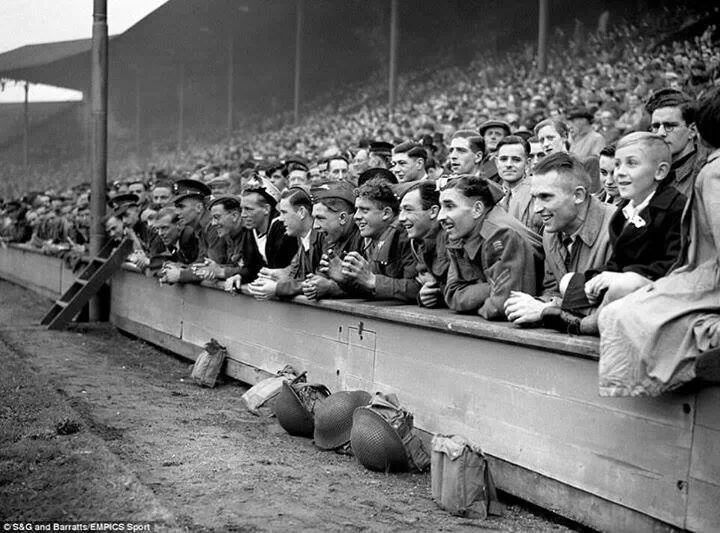
Today, football looks simple and organized: 11 players per team, clear rules, referees, VAR, and perfectly marked pitches.
But the early version of the sport was anything but simple.
In the 19th century, football rules varied from school to school and town to town. Some matches had dozens of players, goals looked completely different, and certain rules would shock modern fans.
When the sport began to formalize under the The Football Association in 1863, many strange rules still existed.
These bizarre early regulations show just how far football has evolved into the global game we love today.
Let’s explore some of the strangest rules in football history.
1. There Was No Crossbar on the Goal
One of the most surprising facts about early football is that goals didn’t always have a crossbar.
Instead, two vertical posts were placed in the ground, and any shot that passed between the posts at any height counted as a goal.
That meant players could blast the ball extremely high into the air and still score.
Eventually, organizers introduced a rope between the posts to limit the height. Later, the rope was replaced with the solid crossbar we know today.
Without that change, modern goalkeepers would have a nearly impossible job.
2. Matches Sometimes Had 20 or More Players per Team
Today, football is strictly played with 11 players per side, but early matches often had no fixed limit.
In the early days of football at schools and universities in England, teams could include 20, 30, or even more players.
The result?
A massive crowd of players chasing a single ball around a muddy field.
It looked less like modern football and more like a chaotic human swarm.
Standardizing team sizes was one of the first major steps toward making the sport more organized and competitive.
3. There Were No Referees
In modern football, referees control every aspect of the match.
But early games had no referee at all.
Instead, each team appointed an umpire who watched from the sidelines. If a dispute occurred, the two umpires discussed it and attempted to reach an agreement.
As you might imagine, this system didn’t always work smoothly.
Arguments often stopped the game for long periods, and disagreements between umpires were common.
Eventually, a neutral referee was introduced to make final decisions and keep matches moving.
4. The Offside Rule Was Extremely Strict
Today’s offside rule allows attacking players some freedom to move forward and create chances.
But in early football, the rule was far stricter.
According to early versions of the law, any player in front of the ball was automatically offside.
This meant players could not position themselves ahead of the ball under almost any circumstances.
As a result, early football involved constant sideways and backward passing.
Over time, rule changes relaxed the offside law and helped transform football into a faster, more attacking game.
5. Players Could Catch the Ball
One of the strangest early rules allowed players to catch the ball with their hands.
But they couldn’t run with it.
Instead, if a player caught the ball cleanly, they were allowed to claim a free kick.
This rule came from the shared origins of football and rugby, which were once much closer as sports.
When the rules of football were standardized by The Football Association, handling the ball gradually disappeared from the game.
The only player now allowed to use their hands is the goalkeeper.
6. There Were No Substitutions
In early football matches, substitutions didn’t exist.
If a player got injured, the team simply had to continue playing with fewer players.
This sometimes created huge disadvantages.
Imagine playing a full match with only nine players because two teammates were injured early in the game.
Substitutions were gradually introduced in the 20th century, dramatically improving player safety and tactical flexibility.
7. No Yellow or Red Cards
Today, every football fan recognizes the yellow and red card system used to discipline players.
But this rule didn’t exist until the 1970 FIFA World Cup.
Before that, referees had to verbally warn players or remove them from the game without a standardized signal.
The card system was created to solve language barriers during international tournaments and quickly became one of football’s most recognizable features.
How These Strange Rules Shaped Modern Football
Many of these strange early rules might sound ridiculous today.
But they were important steps in football’s development.
As the game spread across Europe and the world, organizations such as FIFA and The Football Association worked to standardize the rules and make the sport fairer and more exciting.
These changes helped transform football from a chaotic schoolyard activity into the most popular sport on Earth.
Final Thoughts
The strange rules of early football remind us that even the world’s most popular sport had humble and unusual beginnings.
No crossbars.
No referees.
No substitutions.
Just a ball, a field, and a group of players trying to figure out how the game should be played.
Over time, those experiments shaped the beautiful game we watch today.
And perhaps that’s what makes football so fascinating its history is just as unpredictable as the matches themselves.