BEATING The High Press
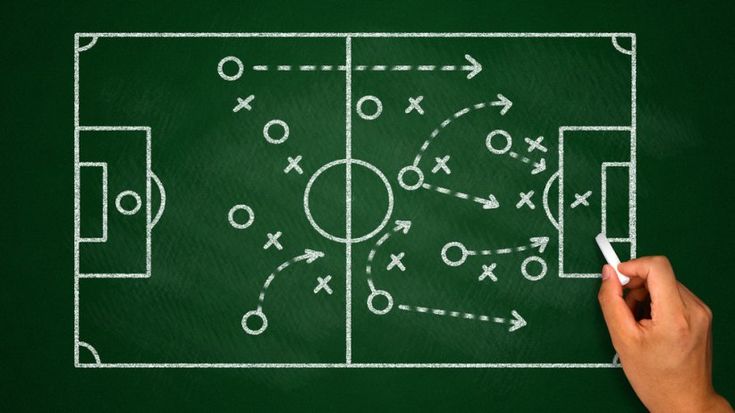
Battling a high press is one of the ultimate tactical challenges in modern soccer. When opponents swarm forward with high-intensity pressure, a team cannot simply boot the ball blindly downfield doing so surrenders possession and invites wave after wave of renewed pressure.
Read more: BEATING The High PressTo break a high press, elite teams use calculated spatial manipulation, geometric passing triangles, and deliberate risk-taking to turn the opponent’s aggression again
1. The Principle of Attraction (Luring the Press)
The most effective way to beat a high press is to invite it. By playing slow, short passes deep in your own defensive third (often near the goalkeeper), you bait the opponent’s forwards and midfielders to step higher and commit to the challenge.
Once the opponent takes the bait and steps out of their defensive block, vast spaces open up in behind their midfield line. A single decisive vertical pass then bypasses half the opponent’s team in one motion.
2. Key Tactical Methods to Bypass the Press
The Third-Man Combination
Instead of passing directly from Player A to Player B (which is heavily marked), teams use a third-man run:
- Player A passes to Player B (who is marked).
- Because the opponent converges on Player B, a third player (Player C) makes a blind-side run into open space.
- Player B instantly redirects the ball (often with a one-touch layoff or header) to Player C, bypassing the press entirely.
The Overload to Escape (The Free Man)
Teams purposefully stack numbers on one side of the pitch—for example, shifting both central midfielders, a fullback, and a winger to the left flank.
- This forces the pressing team to shift over and overload that side to maintain numerical parity.
- Once the press is sucked into the trap, the ball-carrier pings a rapid diagonal switch of play to an isolated winger or fullback wide open on the opposite side of the pitch.
The Sweeper-Keeper as the Extra Outfield Player
Modern teams under a high press routinely use their goalkeeper as an extra central defender. With the keeper stepping up to form a numerical advantage (e.g., 3 defenders + 1 keeper vs. 2 opposition pressers), the pressing team is mathematically outnumbered in the first phase of buildup, making a clean escape pass possible.
3. Tactical Counter-Measures Summary
| Tactical Method | Core Mechanism | Primary Objective | Risk Factor |
| Baiting & Short Passing | Playing slow passes near own goal to draw opponents forward | Create open space behind the opponent’s midfield | High risk of losing possession near own penalty box |
| The Third-Man Run | Using an unmarked decoy player to receive a redirected ball | Beat tight marking through rapid ball movement | Requires exceptional technical precision and timing |
| Diagonal Switching | Overloading one flank to drag the press, then switching long | Isolate an attacker in 1-on-1 space on the weak side | Requires long-range passing accuracy |
| Sweeper-Keeper Utilization | Using the goalkeeper as an extra passing outlet | Create numerical superiority (e.g., 4v3) in the backline | Keeper must be elite with their feet under pressure |
About The Author