The High Press Explained
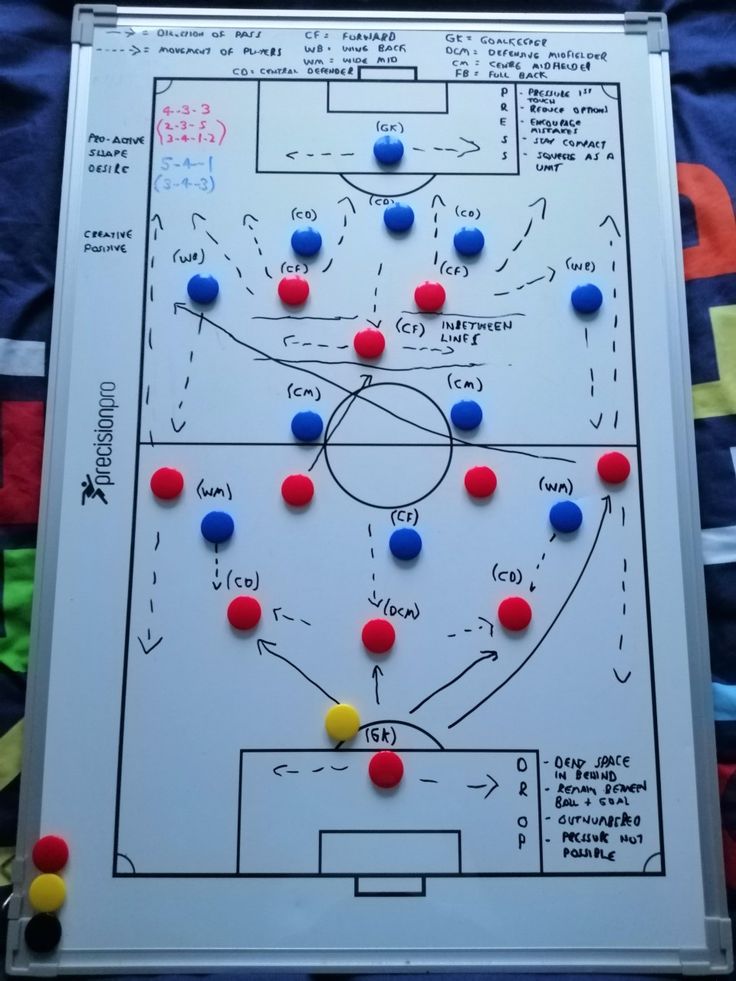
For generations, defense in football was an act of retreat. Teams lost possession, fell back into tidy, defensive banks near their own penalty box, and waited for the opponent to make a mistake. Defending was defined by patience, structure, and low-risk geography.
Read more: The High Press ExplainedThen came the revolution.
In the modern game, the most devastating offensive weapon is often an aggressive defense. Known simply as the high press, this tactical philosophy flips traditional spatial logic on its head. Instead of falling back to protect their own goal, teams storm forward into the opponent’s final third, turning the pitch into an inescapable pressure cooker.
It is a philosophy that views defending not as a passive chore, but as the fastest, most potent route to scoring a goal.
The Philosophy: Why Settle for 80 Yards?
The core premise of the high press, popularized by visionary coaches from Arrigo Sacchi to Ralf Rangnick, Pep Guardiola, and Jürgen Klopp, is simple arithmetic:
“No playmaker in the world can be as good as a good counter-pressing situation.” — Jürgen Klopp
When a team wins the ball near their own goal, they must travel 70 to 80 yards through dense defensive layers to score. But when a team wins the ball 20 yards from the opponent’s net, the opposition is caught out of position, stretched wide, and deeply vulnerable. A successful high press transforms turnover into goal-scoring opportunity within five to six seconds.
                   THE HIGH PRESS ADVANTAGE

    [ Traditional Defense ]            [ High Pressing Strategy ]

    Steal ball in deep box             Steal ball near opponent's box
             │                                  │
             ▼                                  ▼
    Travel 80 yards upfield            Travel 15-20 yards to goal
             │                                  │
             ▼                                  ▼
    Face organized defense             Attack exposed, open defense
The Mechanics: How a High Press Works
Running wildly at the ball is not pressing; it is merely running. An effective high press is an intricate, collective choreography where eleven players move in unison like a expanding and contracting accordion.
1. The Sideline as the “Extra Defender”
Space on a soccer pitch is infinite in the middle, but fixed at the boundaries. Pressing teams deliberately shape their movement to force the opponent’s ball-carrier toward the touchline. Once trapped near the sideline, the passing lanes drop by half, allowing defenders to swarm and isolate the player.
2. Cover Shadows
Pressing is rarely about tackling the player with the ball directly—it is about blocking the options around them. Players run toward the ball-carrier while positioning their bodies to block the line of pass to an opponent behind them. This invisible blocking lane is known as a cover shadow.
3. Pressing Triggers
A press does not run continuously for 90 minutes—that would lead to total physical exhaustion. Instead, it lies in wait, detonating only when a specific trigger occurs:
- A slow or bouncing pass between center-backs.
- A defender receiving the ball facing their own goal (limited field vision).
- A poor first touch by an opposition midfielder.
- The ball moving to a weak footed player under pressure.
Pressing Frameworks: Man-Oriented vs. Space-Oriented
Not all high presses look the same. Elite coaches deploy distinct approaches based on their team’s athletic profile and tactical mindset:
| Pressing Style | Key Principle | Primary Objective | Trade-off / Risk |
| Man-Oriented Press | Every player strictly tracks an individual opponent high up the pitch. | Forces immediate physical duels and quick turnovers. | Leaves massive gaps if one player loses their duel. |
| Space-Oriented Press | Players compress around the space of the ball, ignoring distant opponents. | Suffocates passing options and forces long clearance kicks. | Vulnerable to precise, long diagonal switches of play. |
| Gegenpressing (Counter-Press) | Instant swarming the exact second possession is lost. | Capitalizes on the opponent’s brief moment of disorganization. | High physical fatigue and vulnerability if bypassed. |
The High Risk: Living on the Edge
For all its thrill, the high press is a tactical high-wire act with zero safety net.
To press high, a team’s defensive line must push up to the halfway line—sometimes even beyond—to keep the compact vertical spacing required (typically less than 30 yards from front to back). This leaves 50 yards of empty space behind the defenders.
If the opponent possesses a goalkeeper who can pin-point a 60-yard pass, or a midfielder capable of escaping tight pressure under stress, a single line-breaking pass can eliminate six pressing players in a instant, leading to a catastrophic counterattack.
The Modern Era: An Evolutionary Arms Race
The high press has fundamentally rewritten player profiles in modern football:
- Goalkeepers must act as “sweeper-keepers,” comfortable playing 30 yards off their line to cut off long balls.
- Center-backs must possess recovery speed to handle 1-on-1 duels in open ocean space.
- Strikers are evaluated as much for their pressing work-rate and defensive discipline as their goal tally.
The high press transformed soccer from a game of passive territorial control into a battle for time, tempo, and mental domination. It proved that in the highest echelons of sport, fortune does not merely favor the brave—it favors the team bold enough to turn defense into a relentless attack.
About The Author