Penalty Kick Mind Games.
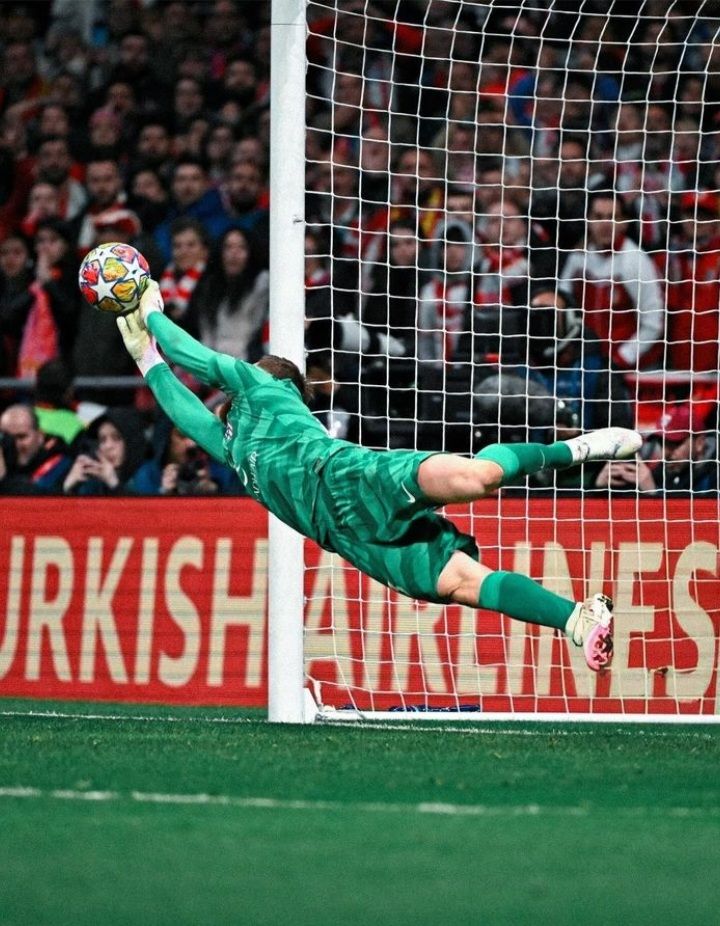
A penalty kick takes approximately 0.2 to 0.3 seconds to reach the goal. Because human reaction time plus the physical effort to dive takes roughly 0.5 to 0.6 seconds, a goalkeeper cannot simply “wait and react.” They must commit before or as the ball is struck.
This sheer physical impossibility turns the penalty spot into a high-stakes arena of mathematical game theory and deliberate psychological warfare.
Read more: Penalty Kick Mind Games.1. Game Theory: Mixed-Strategy Nash Equilibrium
Economists frequently study penalty kicks as a real-world example of zero-sum sequential games. Both players have choices:
- Taker: Shoot Left, Center, or Right.
- Goalkeeper: Dive Left, Stay Center, or Dive Right.
The Problem of Predictability
If a goalkeeper dives to the right 80% of the time, takers will quickly exploit this by shooting left. Conversely, if a taker always shoots to their natural side (e.g., a right-footed player shooting to the keeper’s right), goalkeepers will anticipate it.
To achieve a Nash Equilibrium, both players must randomize their choices so neither opponent can exploit a pattern. This is known as a Mixed Strategy:
                  Goalkeeper: Dive Left    Goalkeeper: Stay Center    Goalkeeper: Dive Right
Taker: Shoot Left       Goal (High)              Goal (High)               Saved
Taker: Shoot Center     Goal (High)              Saved                     Goal (High)
Taker: Shoot Right      Saved                    Goal (High)               Goal (High)
The “Action Bias” Paradox
Economic studies reveal a fascinating game theory anomaly:
- Statistical reality: Goalkeepers who stand completely still in the center save roughly 28% to 33% of penalties, largely because many nervous takers shoot straight down the middle.
- Behavioral reality: Goalkeepers stay center only about 6% of the time.
Why? Behavioral economists call this Action Bias. Goalkeepers feel worse conceding a goal while standing still than when diving dramatically, as diving looks like effort to fans and managers. Modern goalkeepers who master game theory actively fight this bias, remaining central when facing takers who shoot under intense pressure.
2. Psychological Warfare: Manipulating the Taker’s Brain
While game theory dictates the math, psychological tactics manipulate the taker’s cognitive bandwidth, forcing them away from their optimal strategy.
Visual Distraction and Perceived Space
- Off-Center Positioning: A goalkeeper standing just 3–4 inches to the left of the goal line’s true midpoint creates a subtle visual asymmetry. The taker unconsciously perceives the right side as significantly larger and shoots there—allowing the keeper to pre-dive right with an advantage.
- Occupying Visual Space: Waving arms, jumping, or touching the crossbar increases the keeper’s visual footprint, making the 24×8 ft goal frame feel smaller in the taker’s focal vision.
Extending Cognitive Load (Delay Tactics)
The human brain under pressure relies on quick execution to reduce anxiety. Goalkeepers deliberately disrupt this by:
- Handing the ball to the taker directly (or throwing it away).
- Fixing their gloves or adjusting shin guards.
- Taking a slow sip of water before stepping onto the line.
Every second added forces the taker to remain in a state of high autonomic arousal, increasing the likelihood of overthinking and muscle stiffness.
The Strategic Comparison
| Tactic | Game Theory Basis | Psychological Mechanism | Notable Example |
| Off-Center Standing | Induces asymmetric payoff | Exploits implicit visual processing | Jerzy Dudek (2005) |
| Delaying the Kick | Increases decision noise | Heightens stress & cognitive load | Emiliano Martínez (2022 World Cup) |
| Standing Center | Capitalizes on central probability | Exploits taker’s panic option | Tim Krul (2014 World Cup) |
| Trash Talk & Pointing | Forces reactive commitment | Shifts taker from natural routine | Andrew Redmayne (2022 Play-offs) |
About The Author