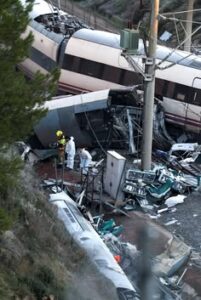
Spain deadly Train Crash
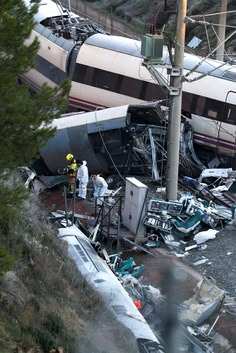
A firefighter and members of the Spanish Civil Guard work next to one of the trains involved in the accident, at the site of a deadly derailment of two high-speed trains near Adamuz, in Cordoba, Spain, January 19, 2026. REUTERS/Susana Vera
At Least 68 Dead After Two High-Speed Trains Collide
At least 68 people have died after two high-speed trains collided in central Spain on October 28, 2026. Here is what we know about the tragedy, rescue efforts and investigation.
Read more: Spain deadly Train CrashA devastating train collision in central Spain has left at least 68 people dead and dozens more requiring medical treatment, turning a routine journey into one of the country’s deadliest railway disasters in recent years.
The crash happened on Wednesday morning, October 28, on the high-speed railway connecting Madrid with Seville in southern Spain. Emergency teams rushed to the scene near Urda, in Toledo province, where damaged carriages, twisted metal and debris were scattered across the surrounding area.
The death toll was reported by authorities as rescue workers continued searching the wreckage. The disaster has raised fresh questions about railway safety in Spain, particularly after another deadly train accident earlier this year.
What happened in the Spain train crash?
The collision involved two high-speed passenger trains operated by Spain’s state-owned Renfe and private rail company Iryo. Both services were travelling from Madrid towards Seville when the crash occurred at approximately 8:53 a.m. local time.
Initial reports indicated that the Renfe train struck the rear of the Iryo train, which had stopped on the tracks. The impact derailed carriages and left some wreckage down an embankment, complicating rescue operations.
The trains were carrying hundreds of passengers. Emergency responders, including firefighters, police officers, ambulance crews and other specialist teams, were deployed to help those trapped inside the damaged carriages.
Hospitals in the surrounding region received injured passengers, while local authorities coordinated emergency assistance and support for survivors and their families.
At least 68 people confirmed dead
The scale of the disaster became clearer as rescue teams worked through the wreckage. By Wednesday, authorities had reported at least 68 fatalities, while dozens of other people had required hospital treatment.
Officials warned that the situation remained serious as rescuers continued their work. The final number of people killed or injured could change as authorities account for passengers and complete recovery operations.
Behind the figures are families waiting for news of loved ones, survivors dealing with physical injuries and emotional shock, and emergency workers facing an extremely difficult rescue operation.
The tragedy has prompted condolences and expressions of solidarity from Spanish leaders and others across Europe.
What caused the collision?
Investigators are examining the circumstances that led to the two trains colliding.
Spain’s transport minister, Óscar Puente, said preliminary information pointed to a serious problem involving railway signalling and the decision to allow the Renfe train to resume its journey despite an active red signal. He described a communications failure affecting the system and an erroneous decision to restart the train as part of the initial account of events.
Authorities will need to establish precisely how the signalling system operated, what instructions were issued, and why the trains were allowed to come into conflict.
These early explanations are important, but the investigation must determine the complete sequence of events before final responsibility can be established. The precise technical and operational causes should not be treated as conclusively settled until investigators publish their findings.
Rescue workers race against time
Emergency crews faced a challenging scene, with several carriages badly damaged and wreckage spread around the railway embankment.
Ambulances and helicopters were used to transport injured people, while firefighters and other rescue specialists worked to reach passengers inside the most severely affected sections.
Local authorities also arranged facilities to receive survivors and provide immediate assistance. Rail services on the affected route were suspended, disrupting journeys between Madrid and destinations in southern Spain.
For survivors, the hours following the collision involved urgent medical care, uncertainty about fellow passengers and attempts to contact family members.
Spain faces renewed questions about railway safety
The disaster is particularly painful because Spain suffered another major high-speed train accident in January 2026. That collision near Adamuz, in Córdoba province, killed 46 people.
The two disasters have renewed scrutiny of railway operations, infrastructure, signalling procedures and the systems designed to prevent trains from entering unsafe sections of track.
Spain has invested heavily in its high-speed rail network, which connects major cities and serves millions of passengers. The latest collision is likely to intensify public demands for answers about how such a serious incident could happen again.
Investigators will need to determine whether the October crash resulted from a specific technical malfunction, an operational error, weaknesses in safety procedures or a combination of factors. Any recommendations arising from the investigation could have important implications for railway safety.
Spanish leaders respond to the tragedy
Prime Minister Pedro Sánchez expressed shock over the crash and offered support to the victims, their relatives and the emergency services working at the scene.
The Spanish royal household also expressed sadness and concern, sending condolences to those who lost family members and support to the injured.
The immediate priority for the authorities remains assisting survivors, identifying those who died, informing families and establishing the facts surrounding the collision.
A tragedy that leaves families searching for answers
The train crash near Urda is a devastating reminder of how quickly an ordinary journey can turn into a life-changing emergency.
As Spain mourns those who lost their lives, attention will remain focused on the rescue operation, the recovery of victims and the investigation into the causes of the collision.
For the families affected, the immediate concern is personal: finding loved ones, receiving accurate information and beginning to understand the consequences of an unimaginable loss.
The coming days will be crucial as investigators gather evidence and authorities provide further updates. Spain will be looking for clear answers—and for measures that can help prevent another railway disaster.
About The Author