The 1:59:40 Miracle
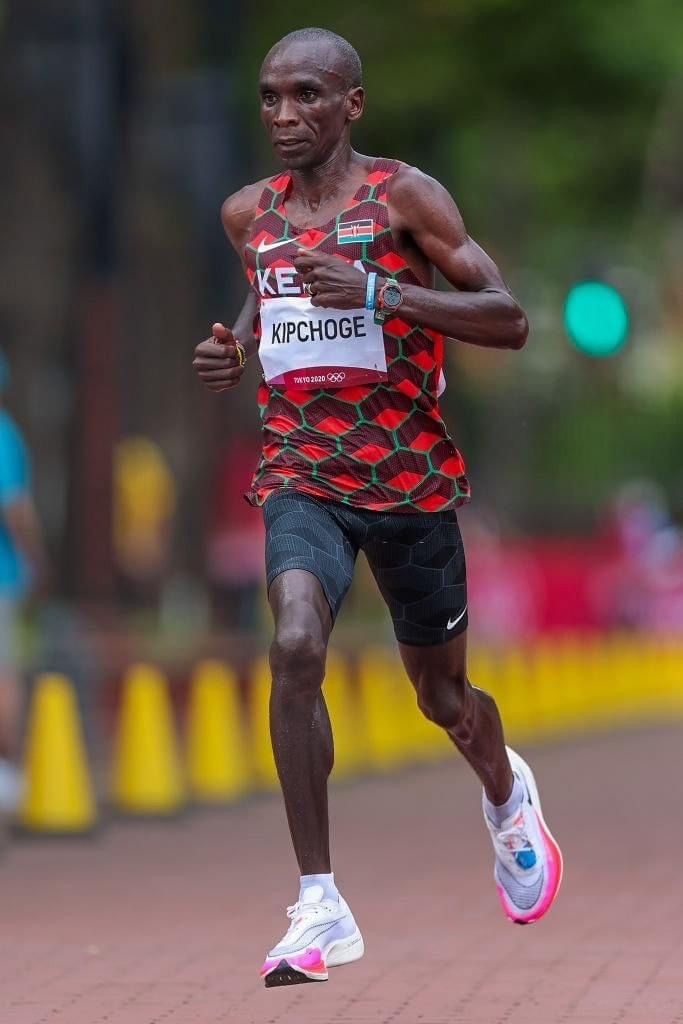
Inside Eliud Kipchoge’s Sub-Two-Hour Marathon
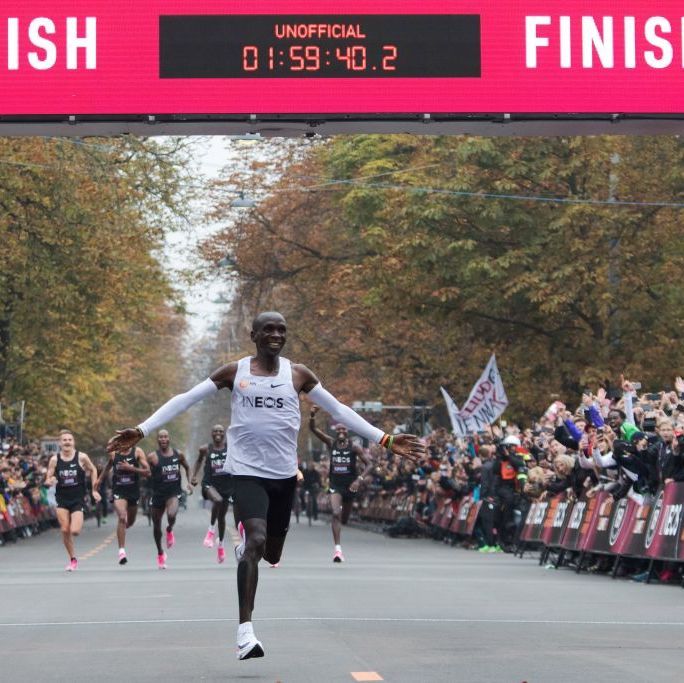
On October 12, 2019, on a tree-lined boulevard in Vienna, Austrian autumn air with sports history. Kenyan distance runner Eliud Kipchoge did what scientists, coaches, and sports historians had spent decades declaring humanly impossible: he ran a full marathon distance—26.2 miles (42,195 km)—in 1 hour, 59 minutes, and 40.2 seconds .
Read more: The 1:59:40 MiracleFor generations, the two-hour marathon barrier stood alongside the four-minute mile and the moon landing as a legendary frontier of human achievement. When Kipchoge crossed the line in Prater park, tapping his chest and smiling into the cameras, he didn’t just break a clock—he redefined human potential, cementing his famous mantra: “No human is limited.”
The Mind-Boggling Pace
To appreciate what 1:59:40 truly means, consider the relentless speed required to sustain it over 26.2 continuous miles:
- Pace per Mile: 4 minutes, 34.5 seconds
- Pace per kilometer: 2 minutes, 50 seconds
- Average Speed: 21.18 km/h (13.16 mph)
- 100-Meter Splits: Running 100 meters in 17.08 seconds—repeated 422 consecutive times without a single break.
Kipchoge ran with robotic, mesmerizing consistency. His split times across every 5-kilometer block varied by no more than five seconds, executing a masterclass in human pacing.
The Science and Engineering Behind the Breakthrough
The event, dubbed the INEOS 1:59 Challenge , was not a standard city race. It was a hyper-controlled sports science experiment designed to optimize every physiological, aerodynamic, and environmental variable.
                  THE INEOS 1:59 EFFICIENCY FORMULA

   [ Aerodynamics ]  ──► 41 rotating pacemakers in an inverted "V" shield wind
   [ Pacing ]        ──► Electric lead car projects laser tracking grid onto road
   [ Equipment ]     ──► Custom Nike Alphafly prototype with dual carbon-fiber pods
   [ Course ]        ──► Flat, low-altitude Prater park straightaway in ideal cold air
1. The Inverted “V” Pacemaker Formation
Air resistance is a distance runner’s silent enemy. To shield Kipchoge from wind drag, a team of 41 world-class pacemakers —including Olympic medalists and world champions—ran in shifts. They formed an inverted “V” wedge ahead of Kipchoge, with two additional pacemakers running behind him. Wind tunnel testing revealed this precise geometric formation reduced aerodynamic drag on Kipchoge by up to 85% .
2. Laser-Guided Precision
An electric lead car drove ahead of the running formation, equipped with a top-mounted laser array that projected a green geometric grid onto the asphalt. This laser ensured the pacing team stayed on a razor-thin 2:50/km tempo down to the exact millisecond.
3. Footwear & Custom Hydration
Kipchoge wore a prototype of the Nike Air Zoom Alphafly NEXT% . Featuring thick ZoomX foam, dual air pods, and a rigid full-length carbon-fiber plate, the shoe acted as a spring, reducing the mechanical cost of running by an estimated 4–5%. Fluid intake was delivered via mobile handlers on bicycles, allowing Kipchoge to hydrate without losing momentum at static water stations.
Official Record vs. Historical Legacy
Despite the monumental achievement, World Athletics (the sport’s governing body) does not recognize 1:59:40 as an official world record. Because the event was a single-runner exhibition rather than an open competition, featured rotating pacemakers, and utilized custom in-stride hydration delivery, it did not meet standard competition criteria.
| Metric | INEOS 1:59 Exhibition (Vienna, 2019) | Official World Record Mark (Berlin, 2023) |
| Time | 1:59:40.2 | 2:00:35 (set by Kelvin Kiptum) |
| Pacemakers | 41 rotating pacemakers entering mid-race | Static pacemakers dropping off early |
| Competition | Solo exhibition run | Open elite field |
| Hydration | Delivered from moving bicycles | Standard station pickups |
However, technicalities do little to diminish the cultural impact of Vienna. Just as Roger Bannister proved the four-minute mile was a mental boundary rather than a physical wall, Kipchoge proved that human physiology can cross into uncharted territory.
The Legacy of a Pioneer
Beyond the shoes, the laser car, and the pacemakers stood a man whose mental fortitude remains unmatched in distance running history. Kipchoge’s stoic focus, deep humility, and belief in collective human effort turned a simple athletic run into a global moment of inspiration.
When the two-hour clock ticked down to zero and Kipchoge sprinted past his pacemakers into the final straightaway, he proved that limits exist primarily in the human mind—waiting for someone bold enough to run right through them.
About The Author